ADVER · LOOP ARCHITECTURE · EUROPE · US · AUSTRALASIA

Engineering
infrastructure
that gets smarter
every cycle.

We embed self-improving AI operating loops into advanced engineering programs.
What was sequential becomes parallel.
The system gets measurably smarter, autonomously, with every cycle.
See how it works →
Tier 01
Loop Diagnostic
3–4 weeks · fixed price
Tier 02
Loop Deployment
60–90 days · outcome-based
Tier 03
Loop Expansion
Ongoing · retainer
The problem
Your engineers are capable.
The architecture is the constraint.
"The constraint is not talent. It is architecture."

Advanced programmes run sequentially. Simulation waits for requirements. V&V waits for hardware. Agentic AI compresses this into parallel. The V-model changes. The Gantt changes.

01 — Hierarchy capture
Internal teams are pulled toward existing structure. Transformation is politically impossible when engineers redesign their own roles.
02 — Coordination is non-trivial
Shared frameworks, conflicting permissions — these require prior experience. Most teams spend 6–12 months learning the hard way.
03 — Domain + orchestration is rare
In physical systems, a badly orchestrated agent is a safety and certification problem, not a software bug.
04 — True cost is understated
Months of engineering capacity lost to linear processes. A working loop from adver in 60–90 days.
Build vs buy
The cost of building from scratch
has changed.
"Building now competes with buying."

We have built hardware and the software that runs it for companies across Europe, the US and Australasia for years, in marine, mobility, energy and aerospace. In the last twelve months AI has cut the cost and time to build an engineered product from scratch further than anything we have seen. That is a significant shift in how hardware gets built, and in how what has already been built is valued.

01 — The build barrier is falling
Controls, embedded software and test that once took years of specialist effort now move in months.
02 — Speed to market
Companies that put AI inside the engineering programme ship the next product faster, at lower programme cost.
03 — Physical systems still need engineering
Motors, inverters, distributed control and certification don't get easier on their own. That is where our background sits.
04 — Proven before it ships
Simulation and verification run alongside design, so the faster build is also a safer one.
Three claims. All contractually defined.
01
Structurally faster
Sequential becomes parallel. Verification runs continuously. The constraint moves from capacity to judgement.
02
Permanently
The loop stays when we leave. Your second programme starts from a higher floor. The organisation does not return to baseline.
03
Lower programme cost
Shorter development cycles, so every programme costs less to deliver. More delivered for the same engineering spend.
"We make engineering organisations structurally faster — permanently — at lower programme cost."
How it works
The five-layer self-improving loop
01
Sensor
Simulation outputs, test results, requirements docs, Jira tickets, code commits, telemetry logs. Reads your engineering environment continuously — not on request.
02
Policy
Explicit rules governing autonomous decisions and escalation to a human engineer. Criteria specified precisely — not left to the model's judgement.
03
Action
Agents generate code, run simulations, check requirements traceability, flag V&V gaps. Each has a bounded scope and a defined output format.
04
Quality gate
Every output checked against defined criteria before use. In physical systems this is non-negotiable — prevents a badly orchestrated agent from creating a safety problem.
05
Learning
Failures improve agent context, policy layer, sensor inputs. The loop gets smarter every cycle. This is the mechanism of "permanently faster."
Recursive Intelligence × Critical Sectors

Compounding advantage where it matters most

Our recursive AI operating loops are already accelerating breakthroughs across the most demanding engineering domains.
Logistics automation engineering — sortation, conveying and robotic handling
01
Logistics

Logistics & Automation

Sortation, conveying and robotic handling commissioned against a live model of the line before go-live. Every jam, no-read and mis-sort becomes signal for the next logic release, so throughput and sort accuracy keep climbing long after handover.

Aerospace and defence engineering — flight controls and structures
02
Aerospace & Defense

Aerospace & Defense

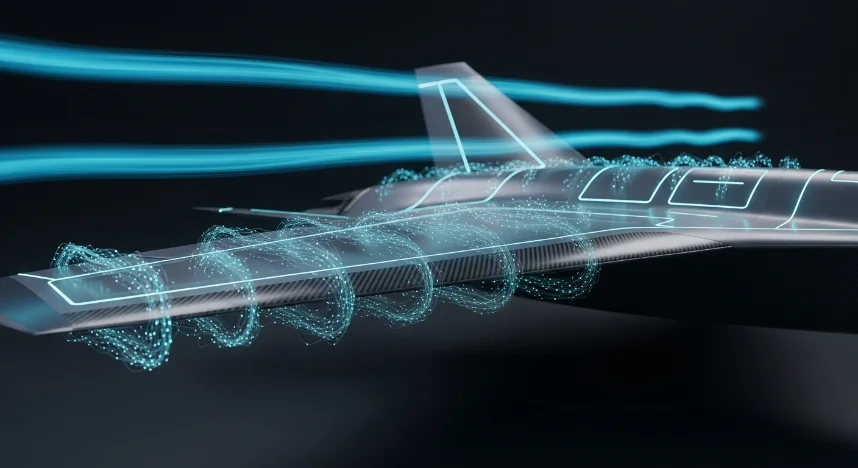
Flight controls, structures, and propulsion validated in continuous loops instead of sequential gates. Every simulation, wind-tunnel run, and flight datum feeds the next, so certification-grade performance compounds cycle over cycle. Programmes measured in years collapse into months.

Mobility engineering — electric and autonomous vehicle systems
03
Mobility & Transport

High-Performance Mobility

Aerodynamics, thermal, and powertrain optimised by loops that never stop learning. Each lap, drive cycle, and failure simulation sharpens the model that designs the next iteration, autonomously closing the gap between concept and homologation.

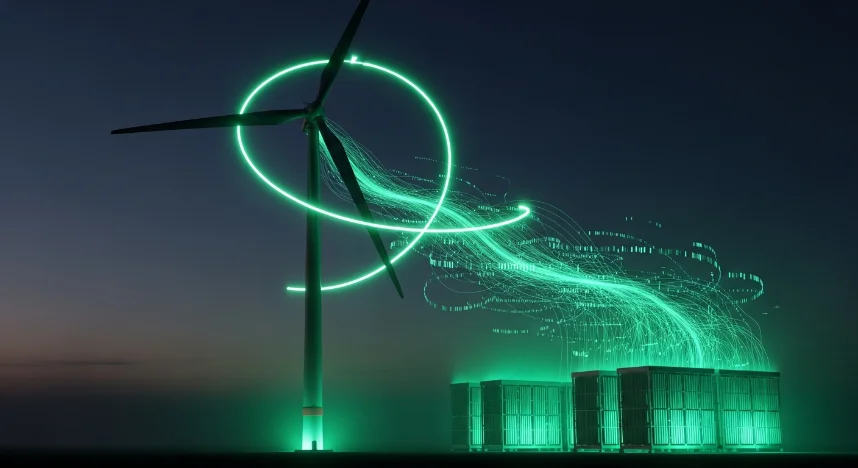
Energy engineering — turbines, reactors and power systems
04
Energy

Energy & Renewables

Turbine, grid, and storage systems modelled by loops that compound every field measurement into better forecasts and control policy. Efficiency gains stack autonomously, turning marginal improvements into exponential capacity across a programme's life.

Advanced materials engineering — composites and alloys
05
Materials

Advanced Materials

Composition, microstructure, and process windows explored by loops that learn from every characterisation run. Candidate materials converge faster with each cycle, discovery that once scaled with lab hours now scales with judgement.

Advanced manufacturing engineering — automation and production systems
06
Industrial

Industrial Manufacturing

Process, tooling, and yield tuned by recursive loops reading the line in real time. Defects become training signal; throughput climbs as the line learns. The factory that ships today is measurably smarter than the one that shipped last week.

Engagements
Three tiers. No time-and-materials.
Tier 01 — Loop Diagnostic Tier 02 — Loop Deployment Tier 03 — Retainer
Duration 3–4 weeks 60–90 days Ongoing
Deliverable Architecture document + success metrics Working loop hitting a contractually defined metric Tuning, expansion, cross-client intelligence
Outcome pricing ✓ ✓ ✓
Loop remains after — ✓ ✓
Cross-client intelligence — — ✓
CEO, CTO or COO sponsorship required for all engagements.
In practice
The loop, applied across the V.
One loop across the whole V: design, verification and the field.
Mapped to adver's five-layer loop. Learned models where the physics is uncertain, deterministic tools for the evidence, and engineers own every release decision.
Machine-learnedSimulationHardware
Tap any stage to explore
Example application
Autonomous Material-Handling Robot
Robotics / Automation & Logistics
VCU-based distributed control · networked drives & I/O
Parallel
Testing starts with design
Continuous
Every change verified
Traceable
Every result tied to a requirement
Compounding
Field data sharpens the models

Robots and automated machines in logistics and manufacturing share the same core: motors, drives, batteries and a VCU coordinating them over a real-time control network. We have built that core across robotics, automation and unmanned programmes. adver adds the loop that runs through it.

What changes: Testing starts on day one, against models, instead of waiting for hardware. Every change is verified automatically and traced to a requirement. Field data flows back into the models, so each release starts from a better baseline than the last. Engineers sign off every change before it reaches a machine.

What stays when we leave: The models, the test suite and the loop itself. The organisation does not return to baseline.

Concept demo · virtual commissioning
The same loop, on a factory floor.

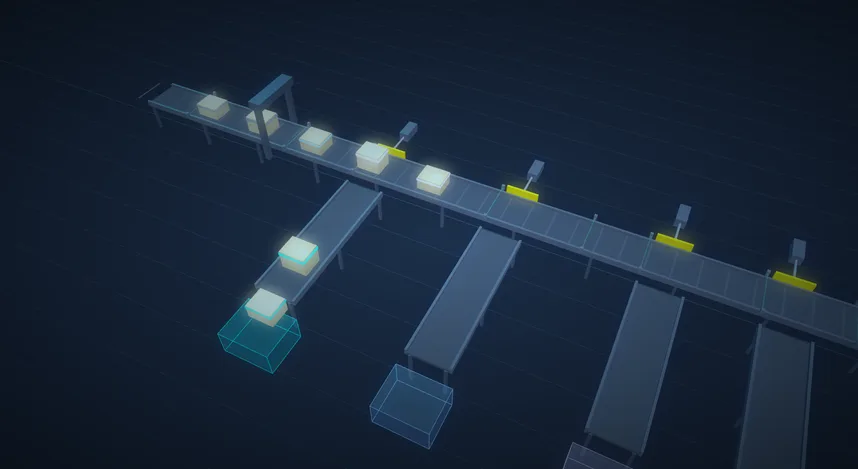
A parcel sortation cell running live control logic against a 3D model of the line. Inject a fault and watch the adver loop detect it, diagnose it, write a logic patch and prove it in simulation. An engineer approves the patch before it touches the cell.

  • Logic proven before steel is on site
  • Faults found in the model, not at go-live
  • Engineer sign-off on every change
  • Every fix added to the regression suite
Open full screen →
Concept demonstration · simulated cell and data
Work with adver
Start with a Loop Diagnostic.
Fixed-price, 3–4 weeks. A precise architecture document for your specific programme. A capital allocation tool — not a sales commitment.
No SDR. Direct conversation with an FDE. Response within 48 hours.
Or write directly — info@adver.systems
adver adver.systems
info@adver.systems · Engineering delivery across Europe, the US and Australasia